
Acupuncture for Pain Relief in Denver
What I treat
- Low back pain, sciatica and disc-related pain
- Neck and shoulder pain, including whiplash and desk-related stiffness
- Knee, hip and ankle pain, including osteoarthritis
- Tennis elbow, golfer's elbow, carpal tunnel and wrist pain
- Plantar fasciitis and Achilles tendinitis
- Sports and overuse injuries from skiing, climbing and cycling
- Fibromyalgia and nerve pain, including pain after shingles
How acupuncture treats pain
Pain is rarely just the spot that hurts. Around every painful joint or strained muscle there are other muscles guarding it, blood flow that has dropped, and a nervous system that has learned to fire the alarm early. Acupuncture works on each of those layers, which is why pain can ease within minutes even when the needle is nowhere near it.
Releases tight muscles
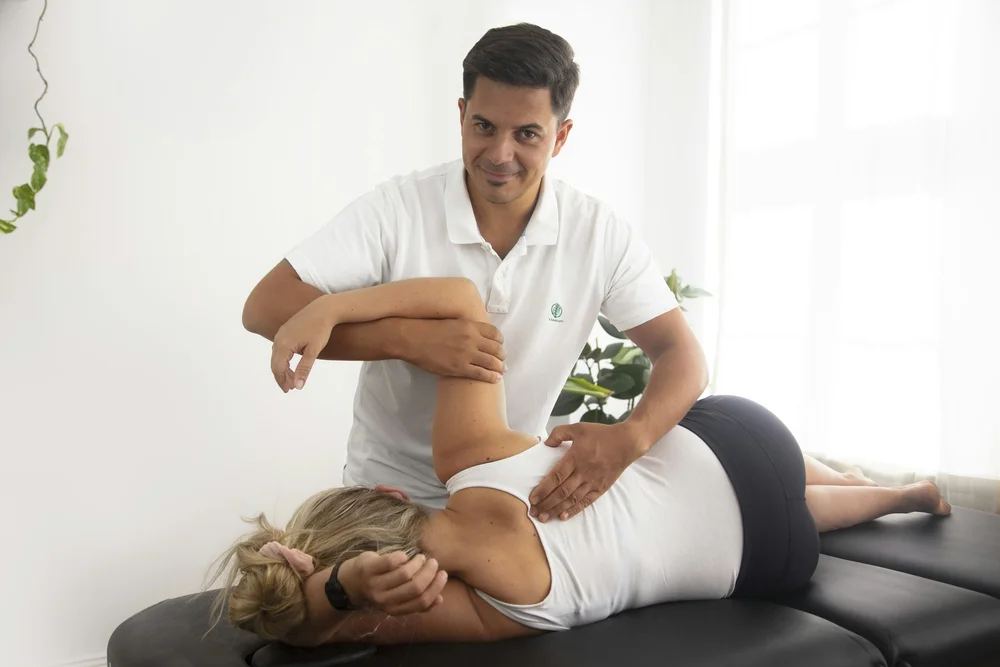
Needles in and around the painful area release muscles in spasm and bring blood to tissue that needs it. I add cupping for tight backs and shoulders, and Tuina when tissue needs to be worked by hand. To compare this with dry needling, see dry needling vs. acupuncture in Denver.

Changes the pain signal
Needles placed further away, often in the hands and feet, change how the spinal cord and brain process the signal. For nerve pain and stubborn chronic pain I add electroacupuncture, a gentle current run between two needles.
Backed by large trials
A 2018 analysis of 39 trials and 20,827 patients found acupuncture beat both sham acupuncture and no acupuncture for back, neck, shoulder, headache and osteoarthritis pain, with the benefit still present a year later (Vickers et al., 2018). The American College of Physicians recommends it as a first-line, non-drug treatment for low back pain.
Sciatica and knees: dose matters
For sciatica from a herniated disc, 10 visits over 4 weeks cut leg pain about twice as much as sham needling (Tu et al., 2024). For knee osteoarthritis the trial that worked used 24 electroacupuncture sessions over 8 weeks, while weekly visits alone did not (Hinman et al., 2014).
Your treatment plan
Your first visit
We go through your history, I watch how you move and check where the pain refers, and you get a full treatment the same day. You lie on a heated table with fine needles for 25 to 30 minutes.
Visits that fit the problem
Follow-ups are 60 minutes for most pain, 30 minutes for a single, well-defined spot, or 90 minutes when I add cupping or Tuina to loosen a large area.
How many visits to expect
An acute strain usually settles in 1 to 3 visits. For chronic pain, the number of treatments is highly individual and depends on how long the pain has been present, what’s driving it (including any underlying structural or functional issues), and factors like stress, mental health, diet, sleep, activity levels, and work demands. I front-load visits and then space them out after patients start feeling significantly better.
When I send you elsewhere
I will tell you if I think you need imaging, a specialist or surgery. If you have any of these red flags, I will send you to a physician first:
- Pain after a fall, accident or other significant injury, especially if you cannot put weight on the limb
- Loss of bladder or bowel control, or numbness in the groin or inner thighs
- Leg or arm weakness that is new or getting worse
- Back pain with fever, unexplained weight loss or a history of cancer
- Severe pain at night, or pain that does not ease with rest or a change of position
- A hot, red, swollen joint
- A swollen, warm, painful calf, which can be a blood clot
- Chest pain or shortness of breath
Acupuncture works alongside physical therapy and chiropractic care, and I am glad to coordinate with your providers.
Ready to start? Book online or call or text (720) 285-6251.

Pain patients from across southeast Denver
Easy to reach
The clinic is at 3600 South Beeler Street, Suite 150. A parking lot with ample space is available on site, with additional street parking nearby, so you do not have to walk far when something hurts. Patients come from the Denver Tech Center, Greenwood Village, Cherry Creek, Glendale, University Hills and southwest Aurora.
Open after work
The clinic is open until 7 p.m. Monday through Wednesday and has Saturday hours, and Southmoor light rail station is a ten-minute walk.
Working with your care team
Many patients come while seeing a physical therapist or chiropractor, and I am glad to coordinate.
500+ five-star reviews across Google, ClassPass and Groupon
—EmilyI do the 90 minute acupuncture and cupping combo. I usually go in with moderate to severe back pain and leave pain free. Mike does a great job explaining things and making you feel comfortable.
—SusanThis was a great experience. I highly recommend. I had bad pains in my neck and shoulders. Cupping really did relieve the pain.
“Mike is so thorough and knowledgeable. Best acupuncture experience I have ever had. I will definitely be going back!”
“The owner Michael was super nice and very knowledgeable! I had a great experience!”
“This is the first time I’ve ever had acupuncture and cupping, and it was great. Definitely recommend.”
Prices
Free in-person or phone consultation
New Patients
Returning Patients
I accept cash, all major credit cards, and HSA/FSA cards. I do not bill insurance directly, but I can provide a superbill you can submit to your insurance company for possible reimbursement.
Frequently Asked Questions
Does acupuncture hurt?
Rarely, and never the way an injection does. Acupuncture needles are about the width of a human hair. Most people feel a brief tap, then a dull, heavy or warm sensation that fades in a few seconds. If any point feels sharp, tell me and I will adjust or remove it.
How many acupuncture treatments does it take to help with pain?
An acute strain usually settles in 1 to 3 visits. Sciatica and chronic neck pain take about 10 visits over 4 weeks. A chronic shoulder takes 12 to 15 visits over 6 weeks, and knee osteoarthritis needs a 24-visit course with electroacupuncture. Frequency matters more than the total, so I front-load visits and then space them out.
How does acupuncture work?
Acupuncture stimulates specific points with very fine needles. That signals the nervous system to release endorphins, increases local blood flow, calms the stress response and reduces inflammation. In Chinese medicine terms it restores smooth movement of qi and blood where it has stalled. I choose points from your symptoms, history, pulse and exam, so no two plans are identical.
Can acupuncture help arthritis in the knee or hip?
Acupuncture does not rebuild cartilage, but it reduces the pain, swelling and muscle guarding around an arthritic joint when the dose is right: the trial that worked used 24 sessions of electroacupuncture over 8 weeks, and a weekly-only trial failed. I plan a front-loaded course or refer you on; I do not sell a weekly knee plan.
Should I see you or a physical therapist?
Often both. Acupuncture calms the pain and loosens the tissue, which makes physical therapy exercises easier to do. I work alongside several physical therapists and chiropractors in southeast Denver and am glad to coordinate.
How can I book an appointment?
Book online at acusimple.com/access/4476, or call or text (720) 285-6251.
Do you take insurance for acupuncture?
I do not bill insurance directly, but I provide a superbill after each visit for you to submit. HSA and FSA cards are accepted, along with cash and all major cards.
Do you use electroacupuncture for pain?
Sometimes. Electroacupuncture connects a small device to the needles, which sends gentle pulses between them. You feel a tapping or tingling, not a shock. I may suggest it for stubborn muscle or joint pain, and I will explain it first. You can always say no.