
Hijama & Wet Cupping in Denver
Hijama may help ease back, neck and shoulder pain and muscle tension. One-on-one care with sterile, single-use supplies.
What hijama is
Hijama, also called wet cupping, is a traditional practice from Islamic and Chinese medicine. It has been used for over 1,400 years across the Middle East, Asia and Africa.
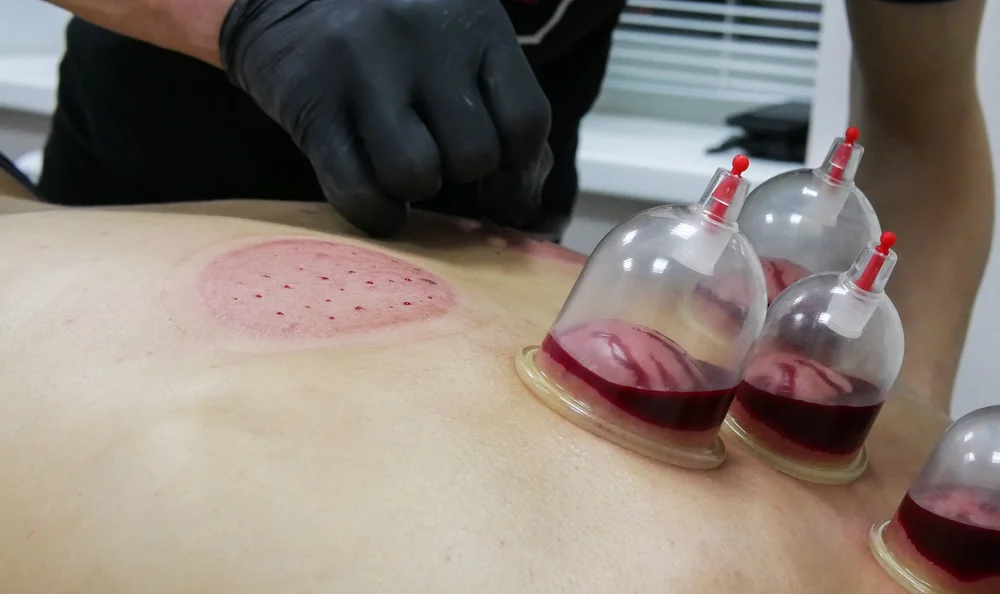
Cups are placed on the skin to create suction. The skin is then lightly pricked and the cups are reapplied, which draws a small amount of blood.
Some people come because hijama is part of their faith or family tradition. Others come for pain or muscle tension. I offer it alongside your regular medical care, not in place of it.
Sterile, single-use supplies
New supplies every session
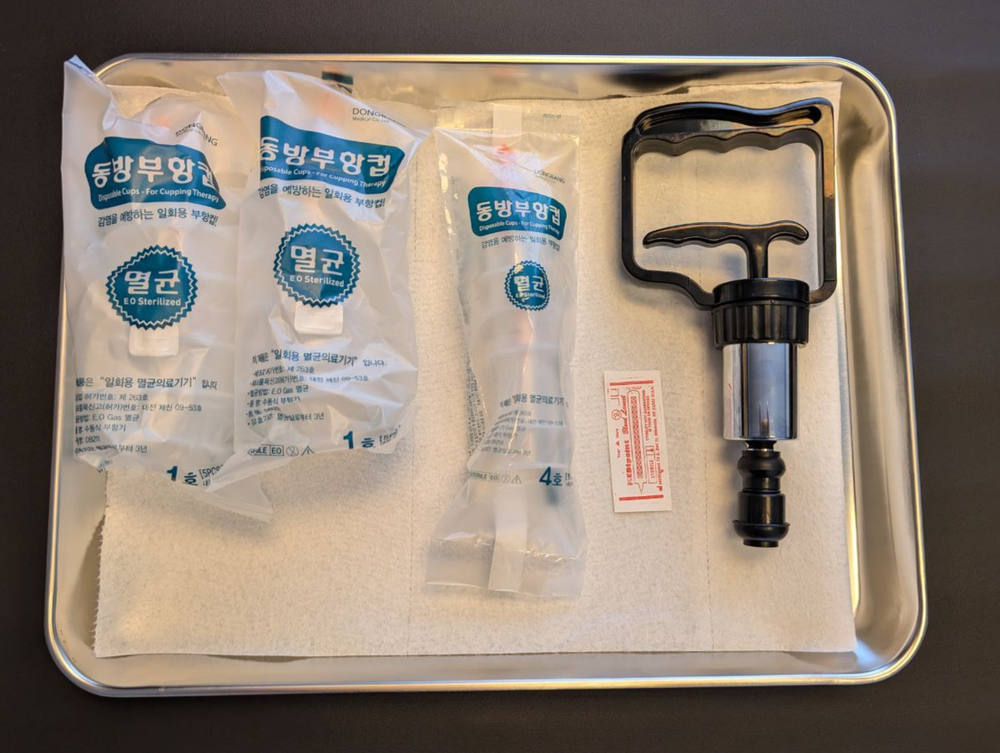
The cups and lancets are sterile and single-use. Each one comes sealed in its own package.
Discarded after one use
After your session, the cups and lancets are thrown away. They are never used on another person.
Clean skin first
The area is cleaned with alcohol wipes before the skin is pricked.
What happens at a hijama visit
A session takes 60 minutes.
We talk
We go over your health history, your goals and any concerns. I tell you honestly whether hijama is a good fit.
Moving cupping
I apply organic, cold-pressed extra virgin olive oil from Morocco and glide the cups over the area for about 10 minutes. This relaxes the muscles and increases blood flow.
Stationary cups
The cups are then left in place for 10 to 15 minutes on the back, head or limbs. This prepares the area for hijama.
Hijama
I clean the skin with alcohol wipes, lightly prick it and put the cups back on for 5 to 15 minutes. I choose the sites by the areas or points that matter most for what I am treating. During this time you are welcome to pray, listen to a recitation, or have someone with you perform ruqyah.
Closing the session
After the cups are removed, I disinfect and seal the sites and go over simple aftercare. The session closes with honey water and a date.
Privacy and comfort
Single-use gowns
Single-use gowns are available if you would like one for privacy and comfort.
Bring a guest
You are welcome to bring a guest with you to your session, including someone to perform ruqyah if you wish.
Who should not have hijama
Tell me about any of these before you book. For some, I will not do hijama. For others, I will ask for your doctor’s okay first.
Hijama is not right if you
- take blood thinners, or took them in the past week
- have a bleeding or clotting disorder, such as hemophilia
- are pregnant or have recently given birth
- have severe anemia
- are being treated for cancer, or have kidney failure, dialysis or liver failure
- are under 18
- gave blood or had wet cupping in the past week
- have an infection, an open wound, sunburn or a skin condition such as eczema where the cups would go
Tell me first, and I may ask for your doctor’s okay, if you
- have diabetes
- have heart disease, a pacemaker or low blood pressure
- have mild anemia
- have had surgery or a broken bone recently
- are menstruating
- faint at the sight of blood or needles
On the day, eat a light meal and drink water first. If you are very hungry, very full or worn out, we can book another day.
This list is general. Your own health history decides. If you are unsure, ask before you book.
Hijama aftercare
After your session, the pricked sites are disinfected and sealed. These steps help them heal.
Keep the sites clean and dry
For the first 24 hours, keep the sites covered, clean and dry. After that, wash gently with mild soap and water and pat dry.
Rest and drink water
Take it easy for the rest of the day. Drink plenty of water, eat a regular meal and skip alcohol until the next day.
No hard exercise or heat
For 24 hours, skip hard exercise. For 48 hours, skip hot tubs, saunas, hot baths and swimming pools.
Leave the sites alone
Do not scratch or pick at the sites, and do not put creams or oils on them unless I tell you to. Keep them out of direct sun and tanning beds until they have healed.
What is normal
Round cupping marks, mild soreness and feeling tired are common. The marks fade in three days to two weeks, and the pricked sites usually heal in about 10 days.
When to call me
Call or text (720) 285-6251 if a site has spreading redness, warmth, swelling, pus or increasing pain, if you get a fever, or if you feel faint or unwell. If bleeding does not stop after 10 minutes of firm pressure, get urgent medical care.
Why people come for hijama
Back and neck pain
Low back, neck and shoulder pain are the most studied reasons for wet cupping.
Headaches and migraines
Some people use hijama alongside their usual migraine care.
Muscle tension
Afterward you may feel looser, with less stiffness and easier movement.
Faith and tradition
For many Muslim patients, hijama is a religious tradition. I am glad to follow the practices that matter to you.
What the research says
Promising for muscle and joint pain
Nine of the 14 trials favored wet cupping, mostly for low back pain, neck pain and carpal tunnel syndrome.
Less low back pain
People who had six wet cupping sessions over two weeks reported less pain and disability than people who had no treatment. The difference was still there two weeks later.
Migraine
Across 1,446 people, treatment was rated a success more often with cupping, and the benefit was seen with wet cupping. Quality-of-life scores did not improve.
A fair note: most of these trials were small, and few compared hijama with a look-alike treatment, so the results are less certain than they sound. The trials measured pain and function. They did not test the traditional idea that hijama draws out stagnant blood.
Prices
Free in-person or phone consultation
New patients can start here. I go over your health history and goals and tell you honestly whether hijama is a good fit.
Hijama
Payment
I accept cash, all major credit cards, and HSA/FSA cards. I do not bill insurance directly, but I can provide a superbill you can submit to your insurance company for possible reimbursement.
Questions about hijama
What is the difference between hijama and dry cupping?
Dry cupping uses suction on intact skin. Hijama, also called wet cupping, adds a step: the skin is lightly pricked and the cups are reapplied, which draws a small amount of blood. I offer both. Dry cupping is covered on the cupping page.
Are the cups and lancets reused?
No. The cups and lancets are sterile and single-use, and each one comes sealed in its own package. After one use, they are discarded.
Does hijama hurt?
The cups feel like a strong pull. The pricking is light and quick. Tell me if anything is too much and I will stop or adjust.
How much does hijama cost in Denver?
At The Subtle Point, a hijama session is $130. The price is the same for new and returning patients.
Why does hijama cost more than regular cupping?
Every hijama session uses single-use, disposable and sterile supplies, and each one is thrown away after a single use. I also pay a biohazardous waste disposal company to pick up and dispose of the waste from these treatments. Those costs are the reason hijama is priced higher than dry cupping.
How long does a hijama session take?
A session takes 60 minutes, including the time we spend talking first.
Will hijama leave marks?
Cupping leaves round marks that last three days to two weeks and fade on their own. If you have an event where you do not want marks visible, book for after it.
Is there anyone who should not have hijama?
Yes. Hijama is not right if you take blood thinners, have a bleeding or clotting disorder, are pregnant or are under 18, among other reasons. For some conditions, such as diabetes or heart disease, I may ask for your doctor’s okay first. The full list is above. Tell me about your health before you book, and I will tell you honestly if hijama is not right for you. See who should not have hijama.
What should I do after hijama?
Keep the sites clean and dry for the first 24 hours, drink water, rest, and skip hard exercise for 24 hours and hot tubs, saunas and swimming for 48 hours. Do not scratch or pick at the sites. Call me if you see spreading redness, swelling, pus, increasing pain or a fever. The full aftercare instructions are above.
Is hijama private? Can I bring someone with me?
Single-use gowns are available if you would like one. You are welcome to bring a guest with you to your session.
Do you take insurance for hijama?
I do not bill insurance directly, but I provide a superbill after each visit for you to submit. HSA and FSA cards are accepted.
How do I book hijama in Denver?
Book online at acusimple.com/access/4476, or call or text (720) 285-6251.
The clinic is at 3600 South Beeler Street, Suite 150, Denver, CO 80237. There’s a parking lot right at the building with plenty of spots.